
Bronze Age / Investors
We think every home will eventually have its own AI computer.
We just don't think it should look like one.
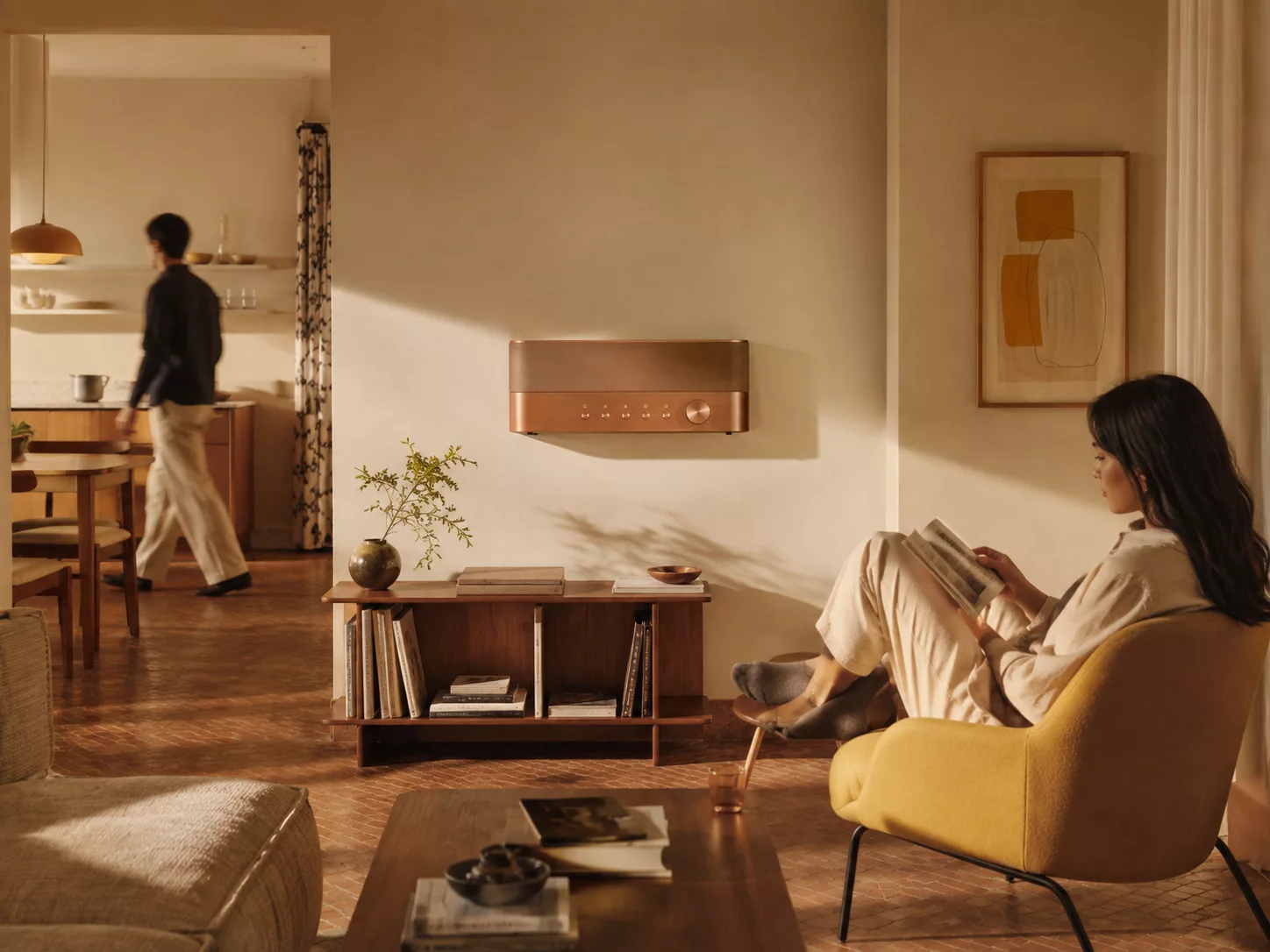
Bronze Age is a British consumer technology company building beautiful, useful physical technology that is private, configurable, upgradeable and made to be kept.
Our first product combines a stereo, personal cloud and local-first AI computer in one object designed to live permanently in the home.
The thesis
Personal computing is coming home again.
AI is becoming more capable, more personal and increasingly dependent on the information that makes us who we are. Yet most of that intelligence — and much of our personal data — still lives on infrastructure we neither own nor control.
At the same time, local models and increasingly capable edge hardware are making another architecture possible.
Your devices. Your data. Your intelligence. In your home.
Bronze Age is building towards a local-first computing layer for the household: persistent, private, remotely accessible and owned by the people who use it.
Local first. Not local only.
The cloud remains available when it is genuinely useful. The difference is that it is no longer required to be the default home for somebody's digital life.
The problem
Advanced technology increasingly asks us to give something up.
-
Capability without ownership.
Our most intelligent services increasingly depend on remote infrastructure and recurring access.
-
Beautiful products without longevity.
Consumer electronics are commonly replaced when the computer inside becomes outdated.
-
Powerful software behind poor interfaces.
Simple everyday actions increasingly require screens, apps and menus.
-
Private computing made for technical users.
Home servers and NAS products exist, but are largely designed to be hidden in cupboards and administered by enthusiasts.
We think those compromises are unnecessary.
Why now
The technology is finally catching up with the idea.
Local AI models are becoming useful enough to perform meaningful everyday work on hardware in the home. Edge compute is improving rapidly. Storage is inexpensive. Secure remote access is mature. And consumers are increasingly aware of what it means for their most personal information to live elsewhere.
The opportunity is not simply to make another AI device. It is to reconsider where personal computing should live.
The cloud became the computer. We think part of the computer is coming back home.
The wedge
We are not asking people to buy a server.
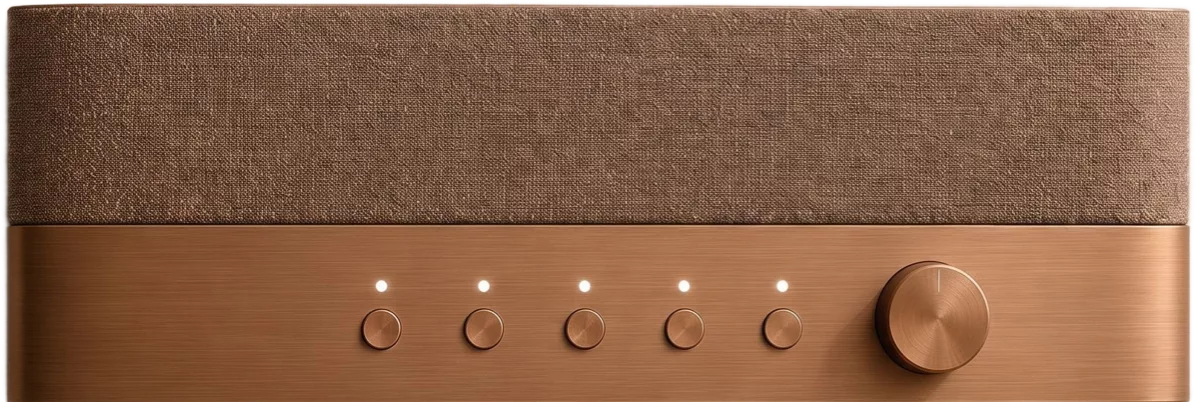
Our first computer takes the form of something people already understand, use every day and are happy to give a permanent place in their home: a stereo.
The Radio combines:
- Full stereo sound
- Five configurable physical controls
- Local AI capability
- Local storage
- Secure remote access
- Physical microphone privacy
- Upgradeable compute and storage
- Software designed to improve over time
A computer for your home, disguised as something you use every day.
Audio gives the product a standalone reason to exist before any platform effect develops. It is permanently powered, naturally connected, accessible to the whole household and already contains the physical interfaces — speakers, microphone, controls and networking — that a home computer needs.
The experience
Useful before it is impressive.
- Press once.
- Start the radio, a favourite record, a routine or something you return to every day.
- Ask your own information.
- Find the builder's quote, an old insurance policy or last summer's photos.
- Keep your files at home.
- Reach them securely wherever you are.
- Share a computer, not an account.
- The architecture is intended to support a household while preserving individual privacy and permissions.
- Disconnect the microphone.
- A physical switch makes the privacy state visible.
Known intention becomes physical. Open-ended intention becomes deliberate AI. Deep configuration belongs on a screen.
Beyond the first product
One home. One intelligence. Many physical interfaces.
The Radio / Home computer
Local intelligence · Storage · Household identity · Secure access
Future Bronze Age products
Sound / Display / Presence / Control / Work
The first Bronze Age product can establish the expensive parts of the system: compute, storage, household identity, AI memory and network presence.
Future products can then become simpler physical interfaces to that shared intelligence rather than each requiring an entirely separate computer.
Those categories are a direction, not a committed roadmap.
The first product gets Bronze Age into the home. The computer inside it creates the platform.
Our approach
Cutting-edge underneath. Permanent on the outside.
Beautiful, useful technology, made to be kept.
-
Advanced, not futuristic.
Use genuinely capable technology without making people live inside a technology demo.
-
Physical when physical is better.
Buttons, switches and materials where they provide a better interaction than another screen.
-
Local by default.
Keep personal data and useful intelligence close to the people they belong to.
-
Open where possible.
Work alongside existing devices and services rather than demand complete ecosystem replacement.
-
Upgradeable by architecture.
Separate the lifespan of the computer from the lifespan of the object.
-
Made to be lived with.
Treat industrial design, sound, materials and tactility as fundamental product qualities.
We are not trying to make less technology. We are trying to make better technology that asks less of you.
Business model
Premium hardware first. A household platform over time.
- Expected first-product RRP
- £2,799 including VAT
- Target mature landed COGS
- approximately £900
- Target product gross margin at maturity
- approximately 60% before fulfilment, warranty, payment costs and customer acquisition
These are current planning targets, not final supplier quotations.
The initial model is direct-to-consumer premium hardware.
Over time, the installed home-computing layer creates opportunities for additional Bronze Age devices, compute and storage upgrades, accessories and carefully chosen optional services.
Subscriptions are not required for the core product.
Market
We are starting with premium audio. We are building for personal computing.
-
Wedge
Premium home audio and design-conscious consumer electronics.
-
Expansion
Personal storage, household AI and connected-home computing.
-
Platform
A family of consumer products sharing local intelligence and household infrastructure.
Our first customer is likely already comfortable spending meaningfully on products from companies such as Apple, Sonos, Bang & Olufsen, premium furniture brands and connected-home systems.
The long-term opportunity is larger than audio because the underlying proposition is not a speaker category. It is a new household computing layer.
We want every home to have its own AI computer.
Position
The missing combination.
- Premium consumer technology Beautiful and simple, but generally closed and difficult to upgrade.
- High-end audio Beautiful physical products, but comparatively narrow computing functionality.
- NAS / home-server products Powerful and owned, but made primarily for technical users.
- Cloud AI ecosystems Highly capable, but dependent on remote infrastructure.
Bronze Age
Beautiful + useful + local-first + configurable + upgradeable + designed to last.
Our differentiation is not any single feature. It is the combination.
Progress
From proposition to physical product.
-
Industrial design
Product form, material direction and physical interaction developed.
-
Working prototype
Core hardware and interaction architecture in development.
-
Product architecture
Audio, local compute, storage, controls and upgradeable internal architecture scoped.
-
Brand and launch experience
Bronze Age identity, product positioning and public reservation site live.
-
Manufacturing
Preliminary BOM, enclosure architecture and DFM approach developed; supplier and manufacturing conversations underway.
-
Demand validation
£0 reservations collected with the expected £2,799 price clearly visible. Not preorders.
The next proofs
The important questions are measurable.
-
Demand
Will strangers seriously consider the product at approximately £2,799?
-
Daily behaviour
Does local household AI create something people repeatedly use rather than simply admire in a demo?
-
Compute
Can useful local inference run within the product's thermal, power and cost envelope?
-
Manufacturing
Can we turn the industrial-design intent into a reliable product at the target cost?
-
Platform
Can the first product genuinely become infrastructure for cheaper future Bronze Age devices?
The next round of work is designed to answer these questions, not hide them.
Roadmap
From prototype to homes.
-
September 2026
Working product + fundraising
Demonstrable prototype. Reservation funnel live. Investor and operator meetings. Local-AI proof of concept.
-
Q4 2026
Production engineering
DFM. Supplier selection. Compute and storage architecture. Thermal and acoustic validation. Manufacturing quotations.
-
Q1–Q2 2027
Engineering validation
Production prototypes. Compliance preparation and testing. Software hardening. Manufacturing jigs and test processes. Paid deposit validation when appropriate.
-
Q2–Q3 2027
Pilot
Approximately 50–100 units. Real household testing. Reliability, sound and AI-usage measurement. Support and installation learning.
-
H2 2027
First production release
Initial customer deliveries. Controlled production ramp. Measure retention, use and referrals. Begin proving the shared-home-compute platform.
Timings are current targets and will change as engineering and manufacturing work progresses.
The round
Raising our pre-seed.
Target raise: $500k–$750k
We are raising the first institutional round to turn the current product into production-ready hardware and prove that the local-first household computing thesis works in real homes.
The round is intended to fund approximately 12–18 months of focused de-risking across product, software, manufacturing and demand.
Use of funds
What the round needs to prove.
- 35%Product & engineering
Compute architecture, electronics, acoustics, mechanical engineering and prototypes.
- 25%Manufacturing & compliance
DFM, tooling, test fixtures, certification, supplier development and pilot production.
- 20%Software & local AI
Local inference, household storage, secure remote access, identity, permissions and product software.
- 10%Pilot operations & quality
Assembly, testing, installations, support and early field learning.
- 10%Demand & working capital
Reservation acquisition, launch assets and operational buffer.
Illustrative allocation. Actual spend will follow the highest-value technical and commercial risks as they are resolved.
What success looks like
Evidence, not a calendar.
This pre-seed should aim to produce:
- Production-intent hardware
- Credible supplier quotations and landed COGS
- Compliance path substantially de-risked
- Strong reservation and paid-deposit evidence at the intended price
- 50–100 real households using pilot units
- Evidence of repeated local-AI / personal-cloud usage
- Evidence that customers understand Bronze Age as more than an audio product
- A clear architecture for lower-cost future Bronze Age devices
The next financing should be raised because the evidence supports scaling, not simply because time has passed.
Team
Built across hardware, software and design.
We are building a small group of exceptional hardware, software, acoustic, manufacturing and consumer-product people around the company.
People we want to meet
- Consumer-hardware engineers
- Local-AI / embedded-ML engineers
- Acoustic engineers
- Manufacturing / DFM operators
- Consumer-tech investors
- Experienced hardware founders and operators
Why Bronze Age?
The most advanced consumer technology increasingly feels temporary.
We want to build the opposite: products with sophisticated computers inside, but the permanence, tactility and presence of the objects people used to keep for decades.
Bronze Age exists to see how far that idea can go.
What could go wrong
We know where the hard parts are.
-
Local AI capability
Models may not become useful enough locally, quickly enough, at our desired cost and power envelope.
-
Price
£2,799 demands exceptional product quality and a customer who values the combined proposition.
-
Scope
Audio, compute, storage, remote access and AI create significant product complexity if v1 is not ruthlessly constrained.
-
Manufacturing
Premium low-volume hardware can suffer from poor yield, long lead times and high working-capital requirements.
-
Platform behaviour
The first product may succeed as audio without proving that customers value the broader household-computing layer.
The purpose of the pre-seed is to retire these risks one by one.
Investor FAQ
Questions we expect.
Why start with a stereo?
Because a home computer needs a reason to be in the home before its platform value exists. Audio gives us daily utility, a permanent location, power, networking, speakers, microphones and physical controls in a product customers already understand.
Why not sell a home server?
Home servers already exist. Most are bought by enthusiasts and hidden away. Bronze Age's thesis is that important computing infrastructure can also be a desirable consumer product.
Why local AI now?
Local inference is becoming increasingly useful while consumers are giving AI access to progressively more personal information. We believe those trends make owned household compute increasingly valuable.
Why £2,799?
The first product combines premium audio, substantial computing and storage hardware, high-quality materials and low-volume manufacturing. Our current target is approximately £900 mature landed COGS, supporting roughly 60% product gross margin before downstream costs. These are planning targets, not final quotations.
Is Bronze Age an audio company?
Audio is our first category. The company is defined by its approach to physical computing: beautiful, useful, local-first, configurable and made to last.
What is the moat?
No single component is proprietary enough to be the moat. The opportunity is to compound industrial design, hardware architecture, software, household data infrastructure, customer trust, brand and an installed ecosystem of devices around a shared home computer.
What are you raising?
We are currently targeting a $500k–$750k pre-seed to fund production engineering, local-AI software, pilot manufacturing and first real households.
We think every home will eventually have its own AI computer.
We're building the one people will want to keep.
Raising $500k–$750k pre-seed